
Wearable interaction · Physical computing
Appear.
An exploration of
touch across distance.
A sculptural garment that brings together heat-sensitive fabric and connected hardware to explore how a hug might travel between two people.
Explore the project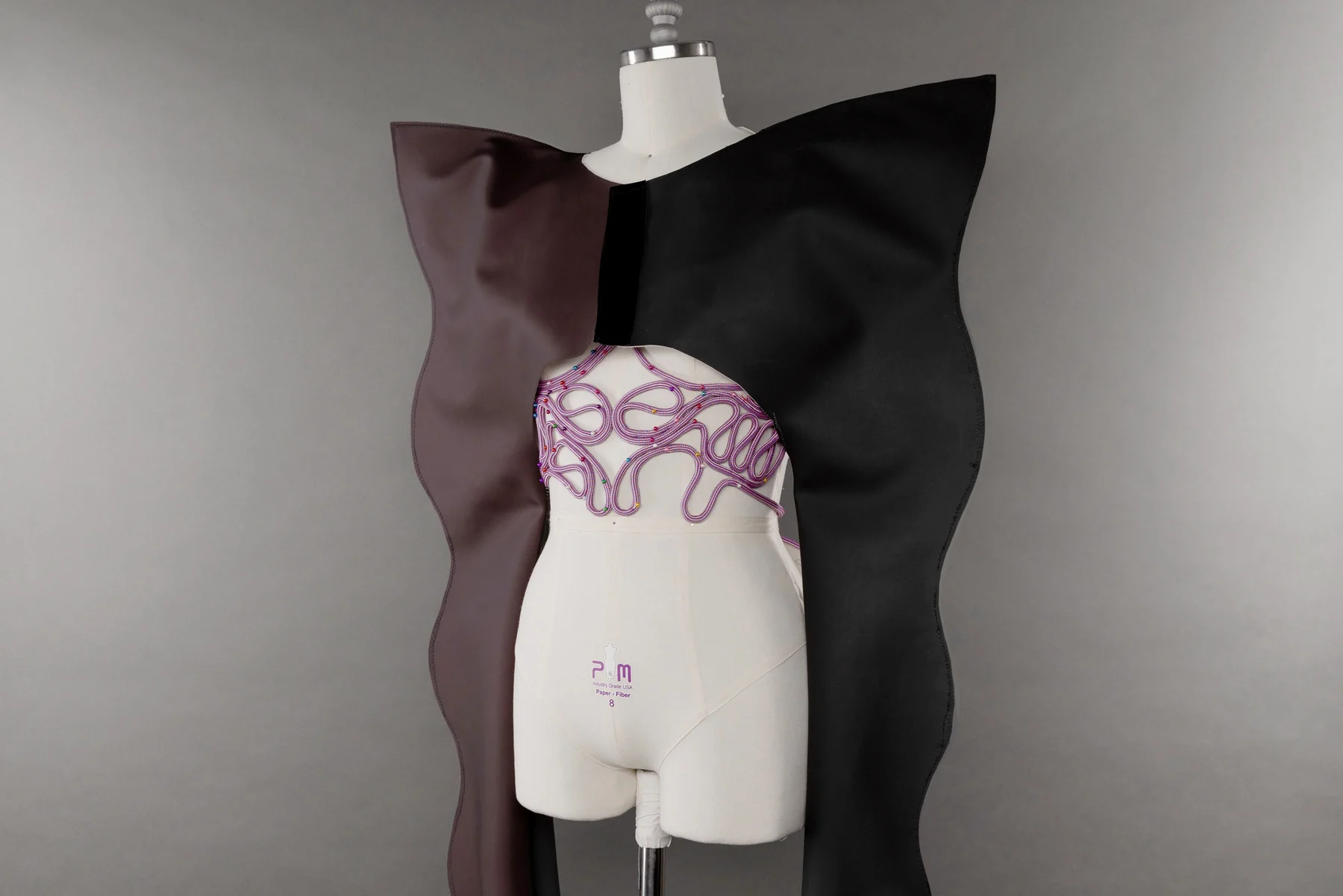
01 / The idea
Connected by a screen.
Still missing a hug.
As an international student, I could speak to my family through a screen while still missing their physical presence. Time differences and unreliable connections made that distance feel even greater.
Appear began with the space between seeing someone and feeling close to them. I wanted to explore whether a garment could make that connection tangible through warmth, pressure, and a visible trace of touch.
02 / The form
Finding a shape
for closeness.
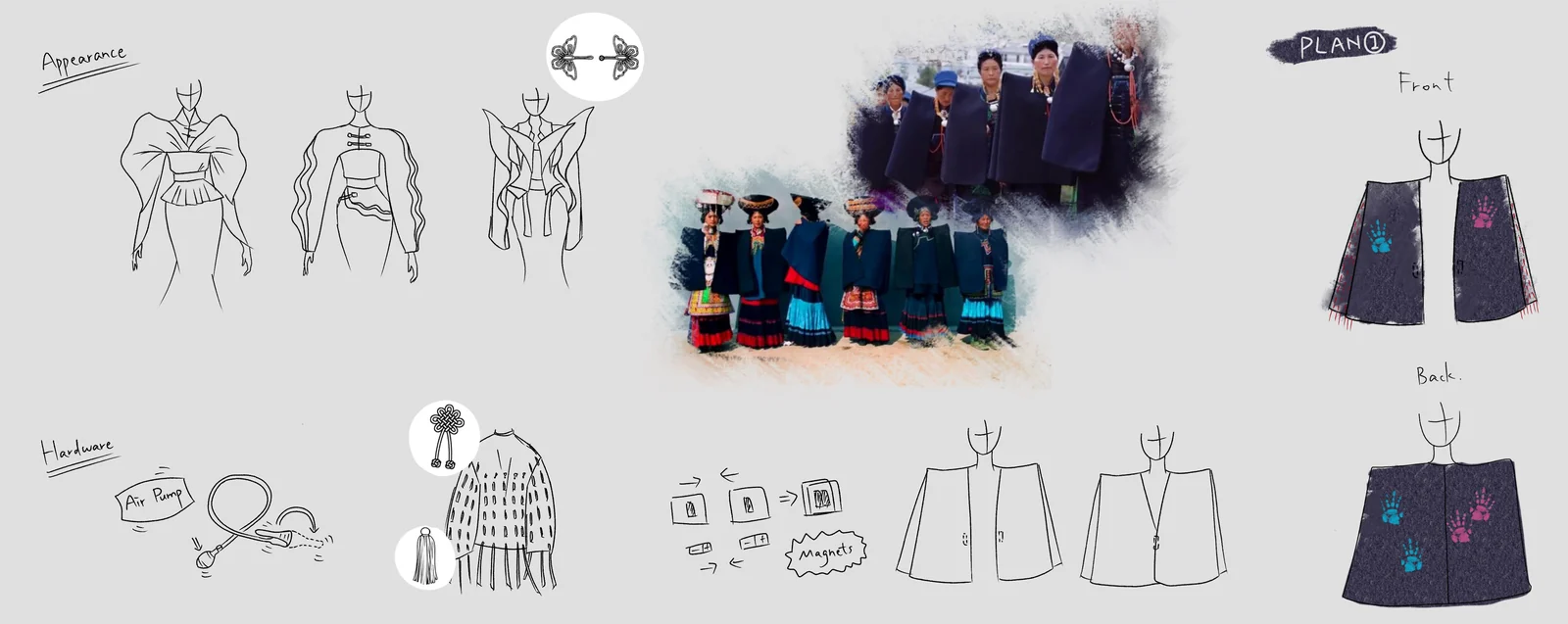
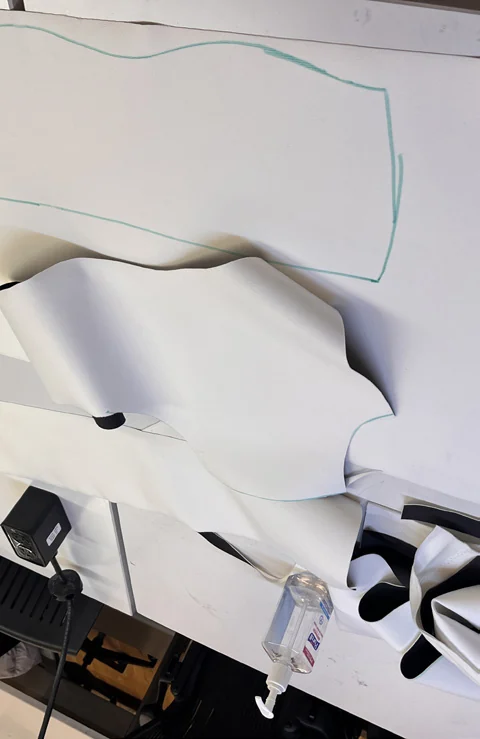
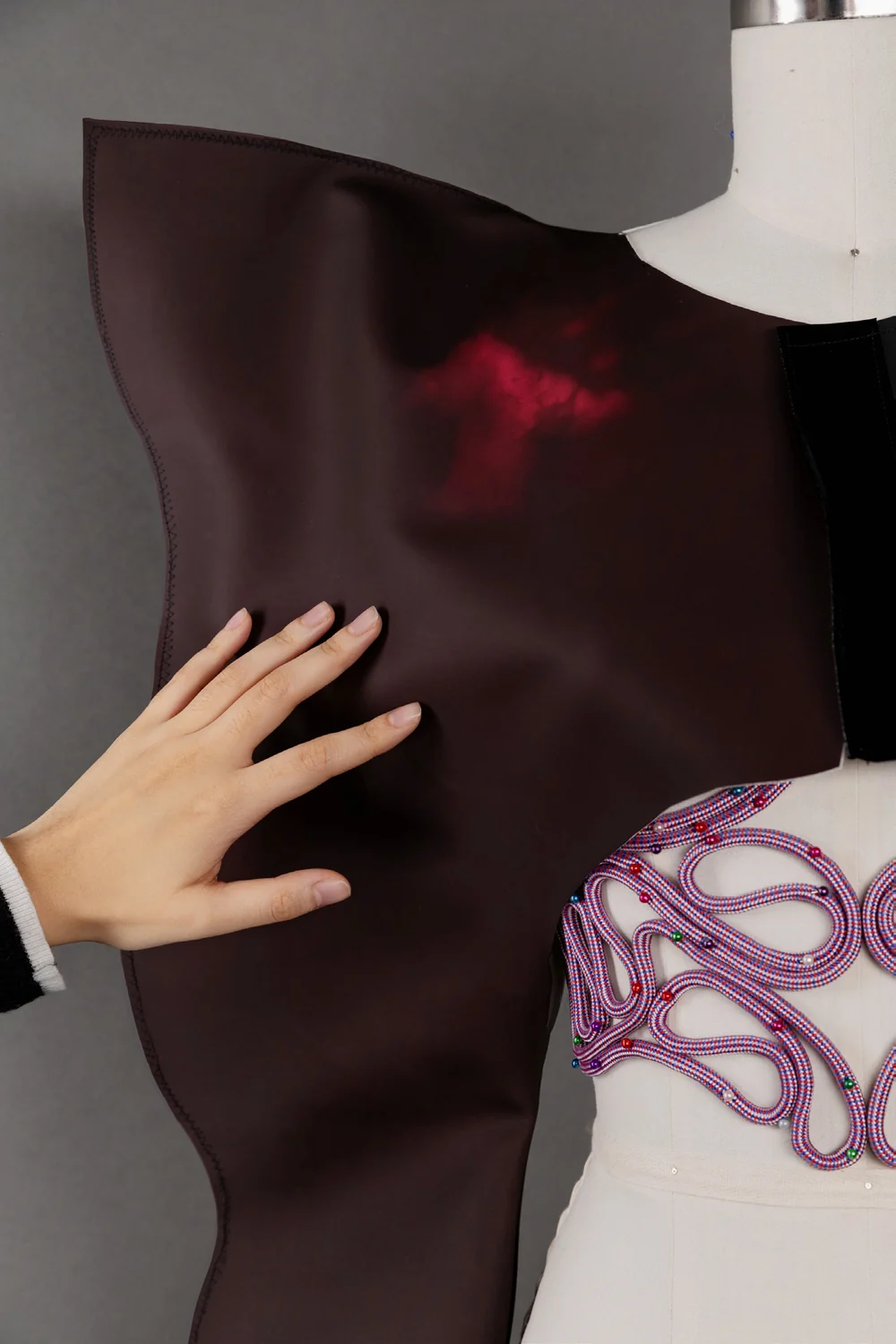
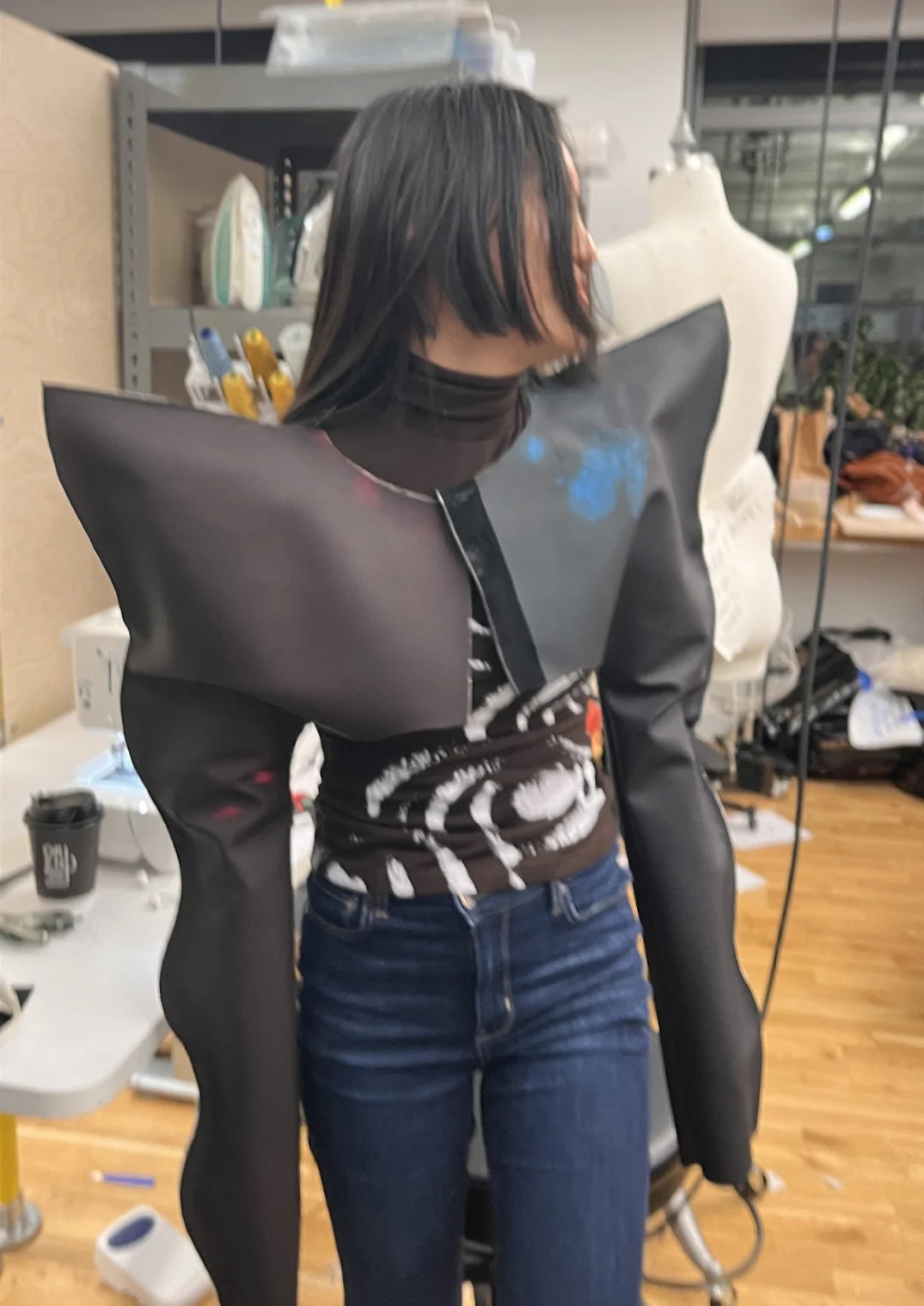
Drawing inspiration from cloaks worn by the Yi people in China, I explored several silhouettes before choosing pointed shoulders and wavy sleeves. The garment became both an expressive form and a surface for interaction.
03 / The system
From a touch
to a response.
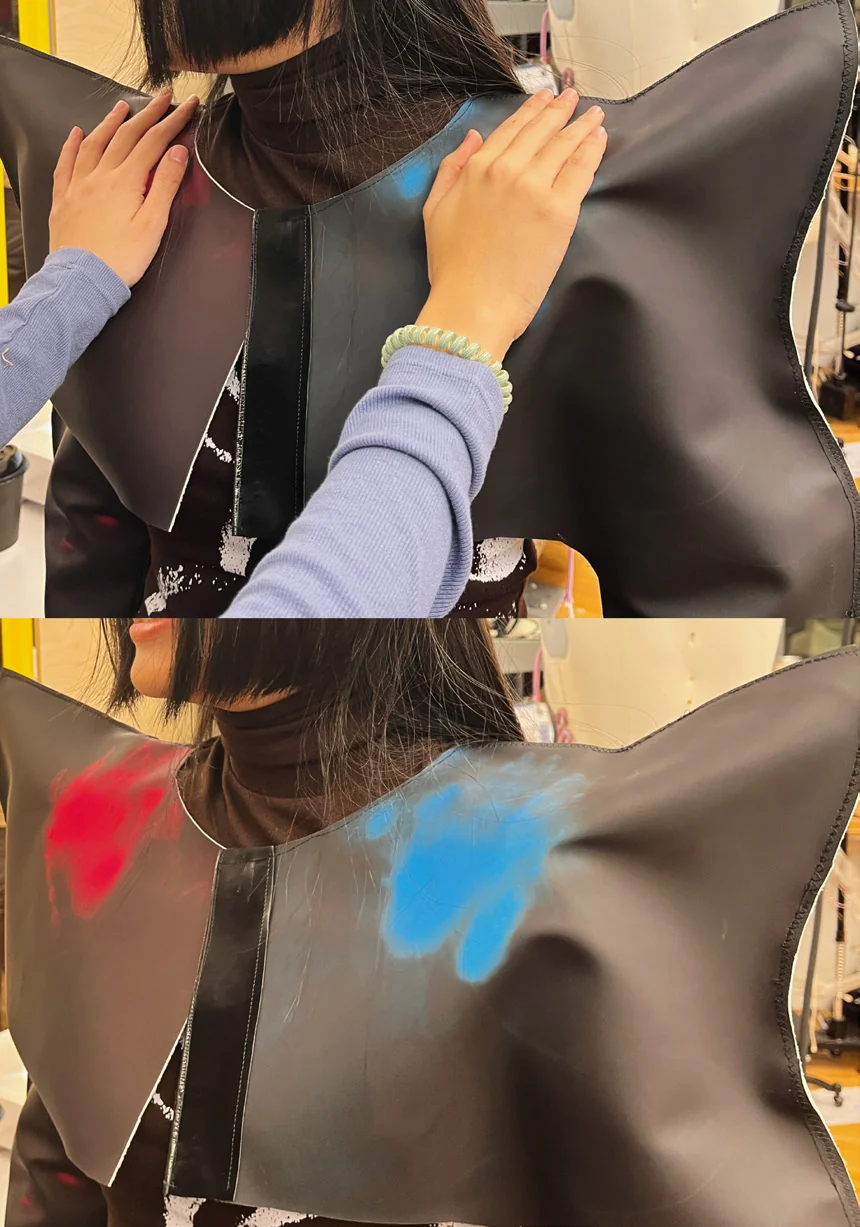
The system concept connects two units over Wi-Fi. A sensor event in one unit triggers a heater and air pump in the other. Warmth changes the fabric’s appearance; inflation explores the pressure associated with a hug.
Sense a touch
A sensor event starts the interaction.
Send the signal
Wi-Fi connects the two units.
Make it tangible
The heater and pumps produce warmth and inflation.
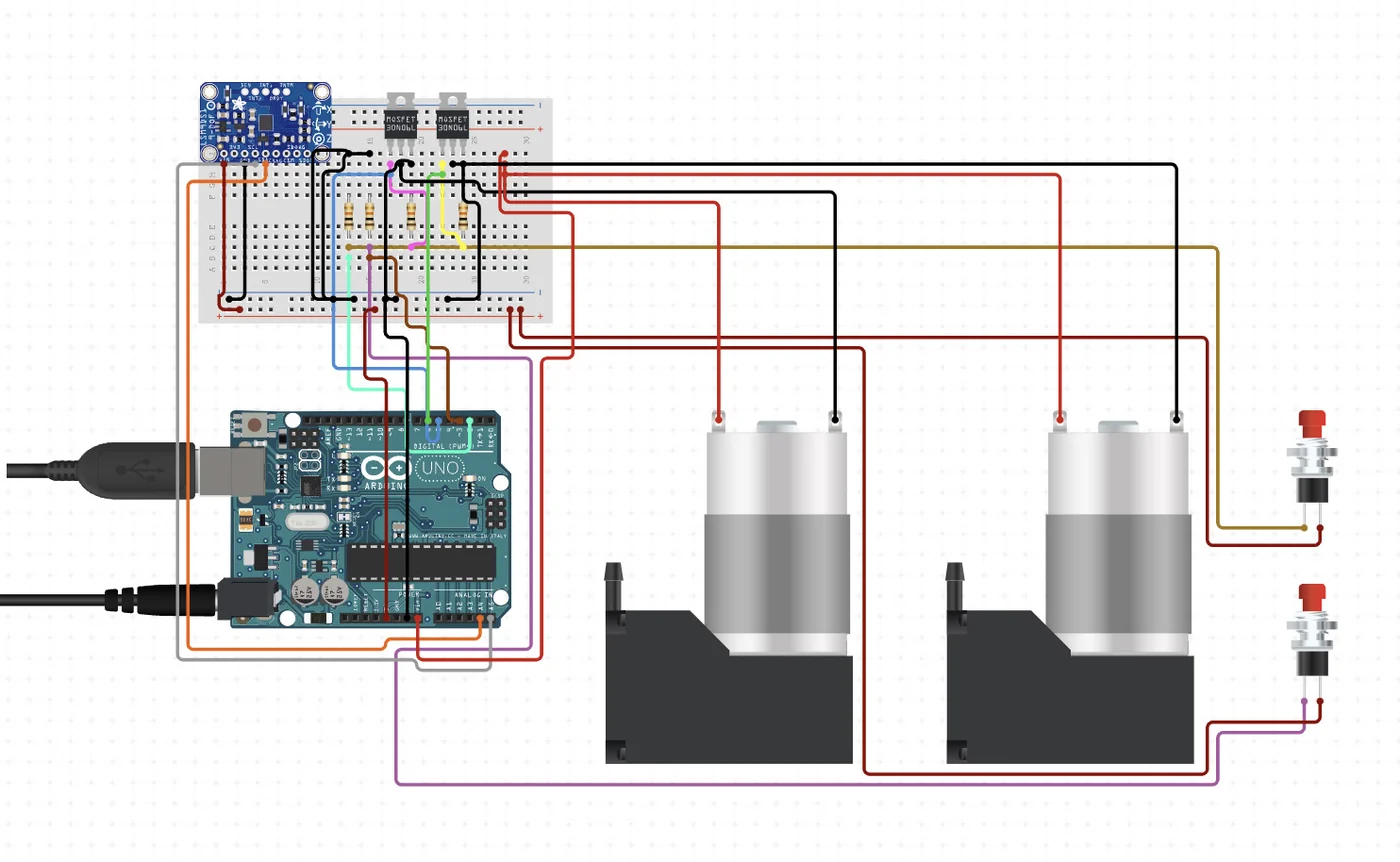
System concept / prototype architecture
Building the response
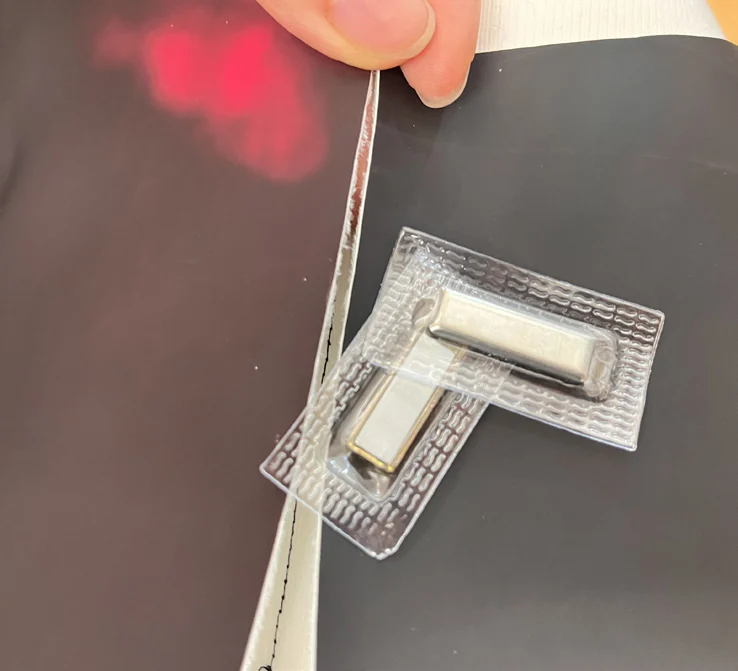
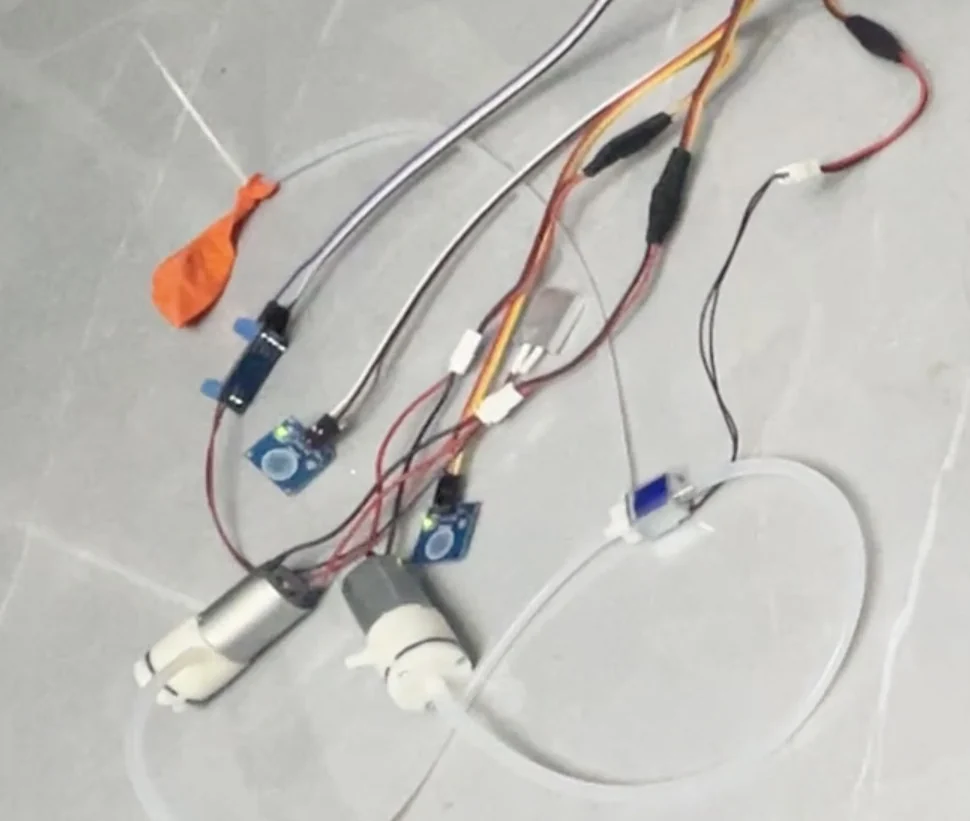
The hardware setup brings together a controller, sensors, power, a heater, and two pumps—one for inflation and one for deflation—with a valve controlling airflow.
The control logic switches the heater and air system in response to incoming signals. Alongside the garment, I explored these mechanisms through wiring studies and bench tests.
Material experiments
Making an invisible
gesture visible.
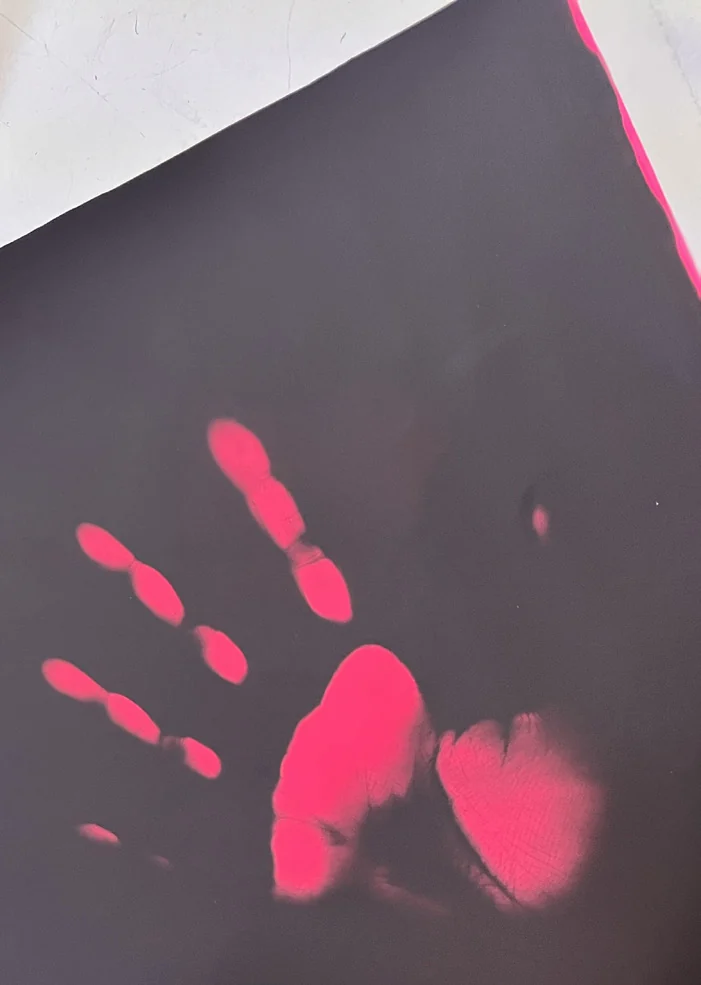
I tested the heat-sensitive fabric’s response to warmth and touch, and experimented with the pump mechanism as a way to translate pressure into a wearable sensation.
04 / The prototype
From the workbench
to the body.
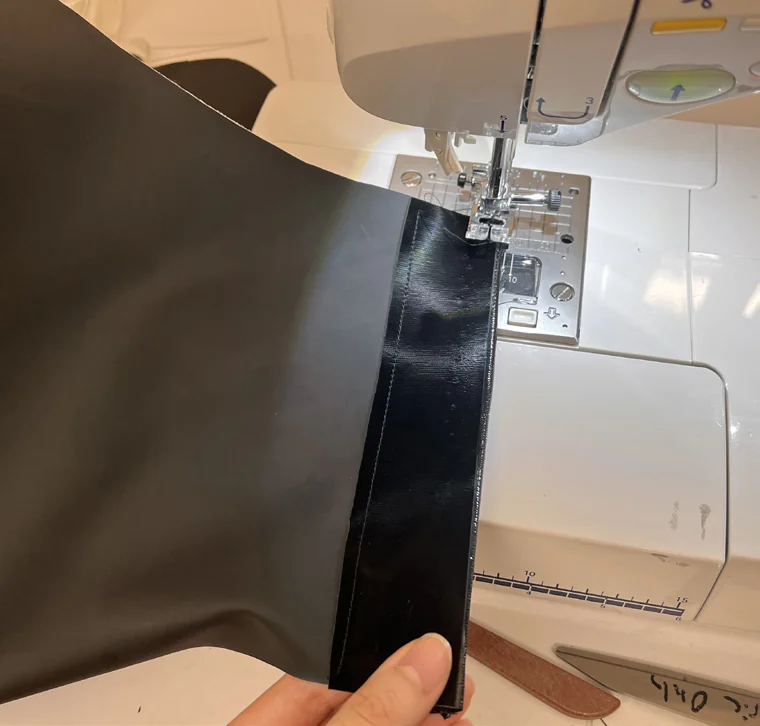
I assembled the garment and documented a local wear test with a friend. These photographs show the finished silhouette and the fabric’s visible response to touch.
An ongoing exploration
Presence, through material.
Appear brings costume design, material experimentation, and physical computing into one wearable prototype. The work documented here captures the garment, touch response, and hardware exploration.
The original next direction explored transparency and the visual idea of “disappearing”—another way to express the emotional experience of being far from home.