Visual programming
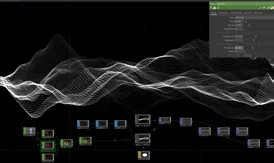
Waveforms as a visual material
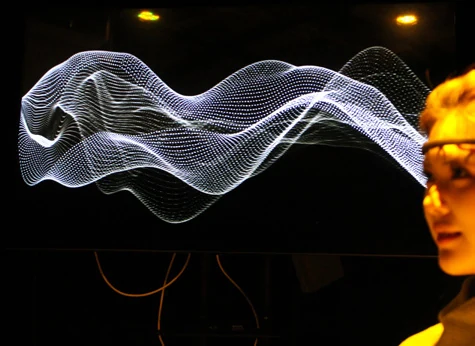
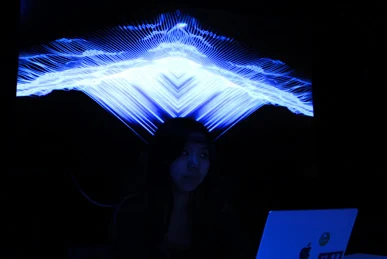
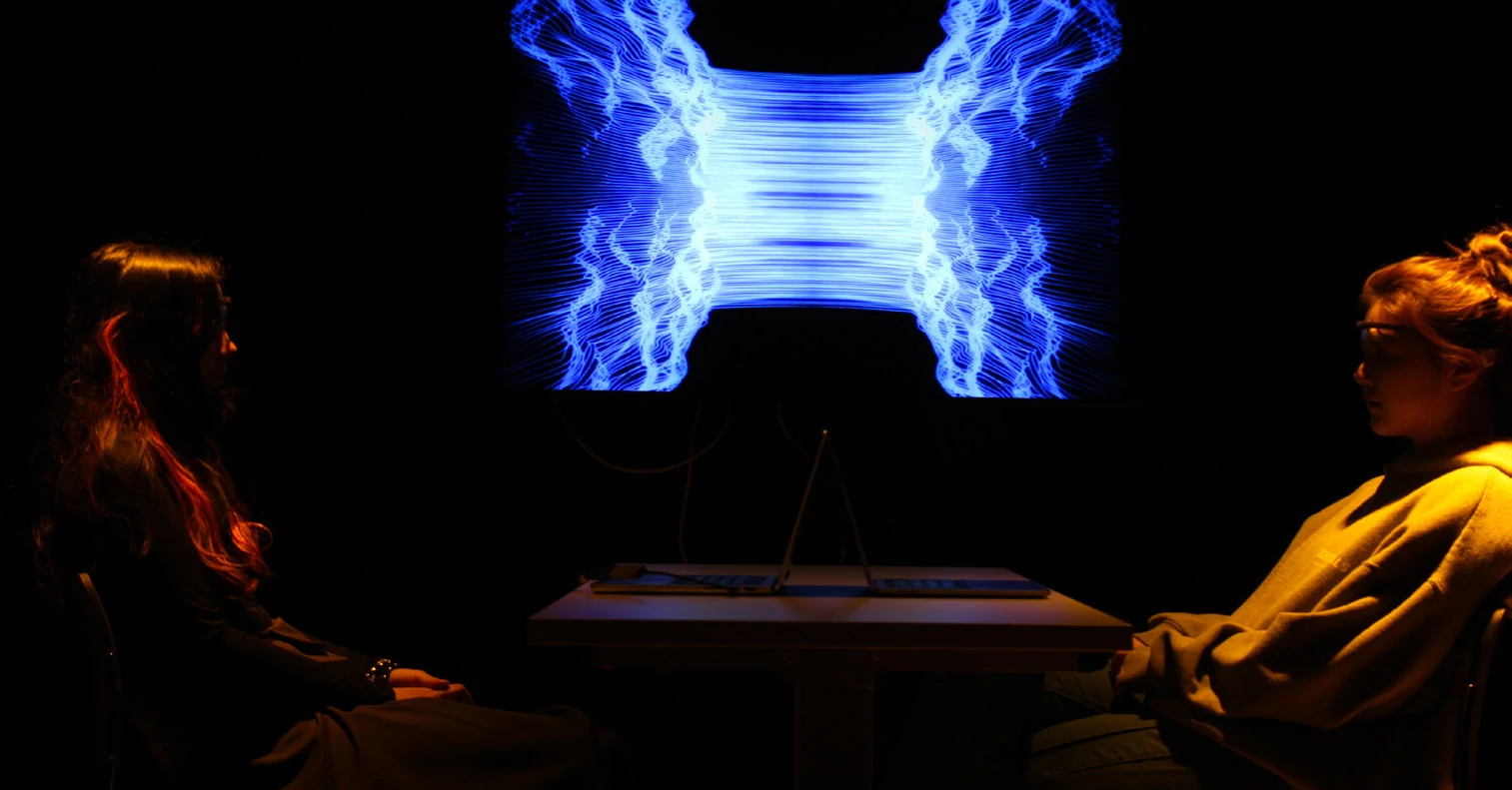
In TouchDesigner, I explored wave patterns and amplitude as the basis for projected visuals. The resulting forms gave the performance a changing visual presence behind the participants.

Audiovisual performance · Creative computing
Present in the room.
Somewhere else in mind.
A live performance exploring digital distraction through projected waveforms, wearable sensing, and shifting light.
Explore the project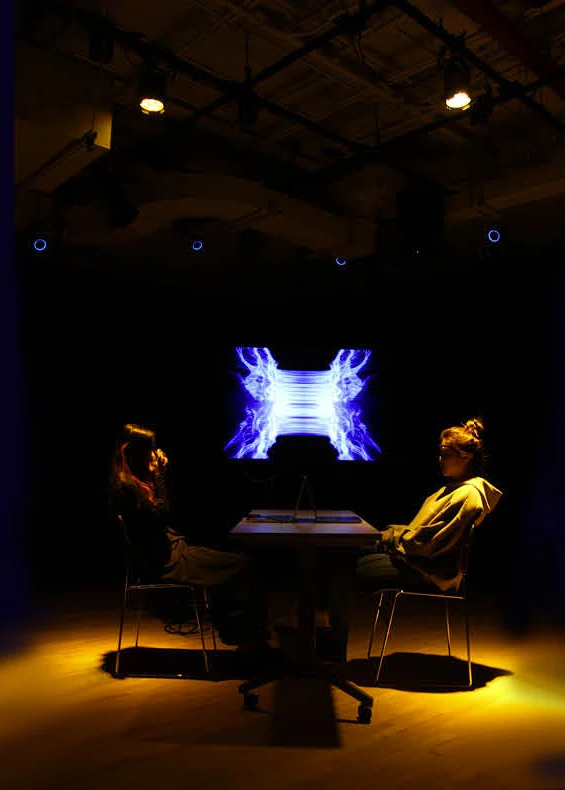
01 / The idea
I began with a familiar scene: people sharing a physical space while their attention is absorbed by a screen. Depersonalization explores the uneasy feeling of being present, yet absent.
The project uses the image of a non-player character, or NPC, as a metaphor for automatic behavior. I translated that question into a performance: how might a shift in attention become something we can see?
02 / The interaction
The interaction concept begins with two people facing one another. Wearable readings and a webcam-based experiment provide inputs; projected waveforms and lighting give the encounter a visible, spatial response.
A seated participant wears a MUSE 2 headset.
Compare incoming readings and experiment with webcam classification.
Waveforms and light turn the concept into a performance.
Interaction concept / expressive interpretation of signals
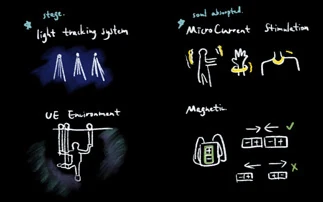
I explored MUSE 2 readings alongside a MobileNet image-classification experiment in p5.js. These inputs helped frame the relationship between a person’s behavior and the scene around them.
Early sketches also considered a wearable microcurrent cue. The project’s central question remained expressive: how could sensing, movement, and light make the experience of distraction perceptible?
03 / The making
I developed the work across visual programming, lighting control, and performance planning. Each layer shaped how the encounter would read in the room and on camera.
Visual programming
In TouchDesigner, I explored wave patterns and amplitude as the basis for projected visuals. The resulting forms gave the performance a changing visual presence behind the participants.
Lighting control
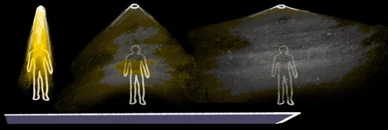
I used a DMX lighting system to control intensity and shift between a focused spotlight and a broader wash. Light made the participants and their movements part of the visual composition.
Performance planning
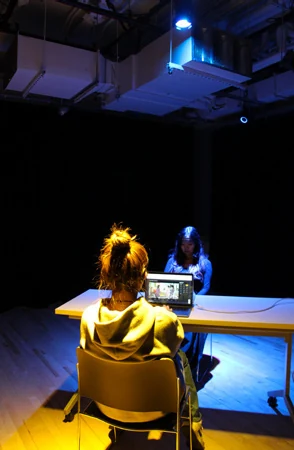
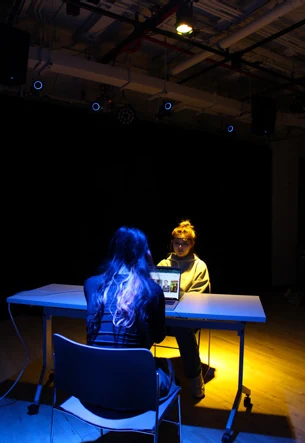
I wrote a storyboard with camera specifications and detailed shot descriptions, then set up the space around the participants, screen, and lighting. The documentation captures both the face-to-face arrangement and the view from behind each participant.
04 / The performance
The final documentation brings the layers together: two people, a table, a projected waveform, and light that shapes the space between them.
Reflection
Depersonalization brings creative coding, wearable inputs, and stage lighting into one encounter. It treats digital distraction as a subject for performance, giving an everyday experience a visible form through movement, waveforms, and light.