Let people choose
how they’re addressed.
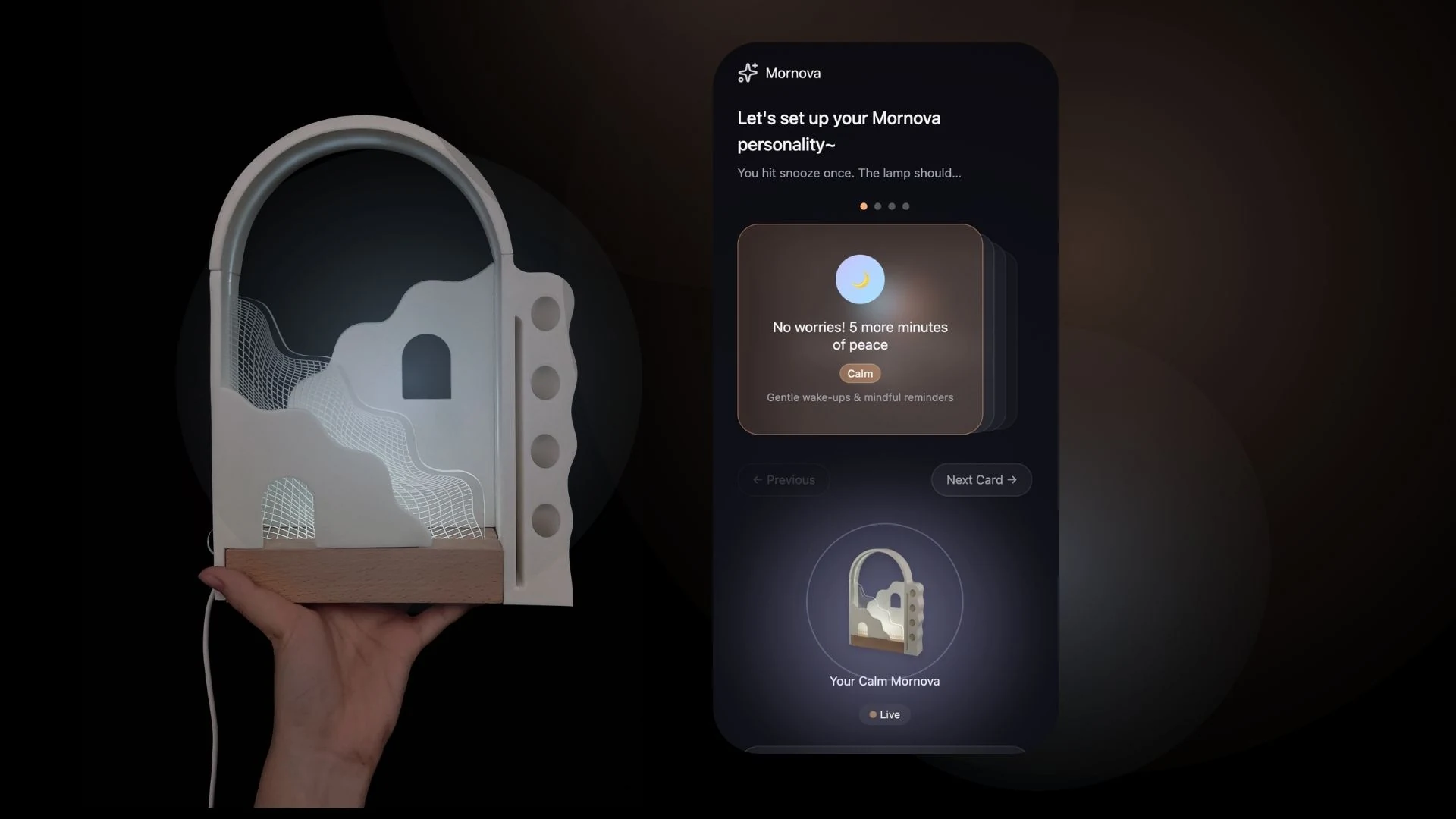
A helpful message can still feel wrong in the wrong voice. Calm, Direct, Playful, and Friendly personalities let people choose the tone of their morning companion.
Mornova / AI product design · Physical computing
An adaptive morning companion that connects a web assistant with a light-based physical device.
I took Mornova from a personal frustration to an end-to-end build—designing the interactions, shaping the lamp, and connecting the software and hardware.
See it in action01 / The experience
During graduate school, my schedule kept changing, but my alarm treated every morning the same. I wanted a wake-up experience that could respond to the day ahead and still feel calm.
Mornova brings together calendar and weather context, an AI conversation, and ambient light. The design question became: how can a morning assistant adapt while leaving the person in control?
Choose a personality, wake time, and morning preferences.
Use calendar and weather context to inform the morning.
Bring the light and conversation into the wake-up experience.
Change the routine or hold the lamp’s sensor to snooze.
Recorded demonstrations
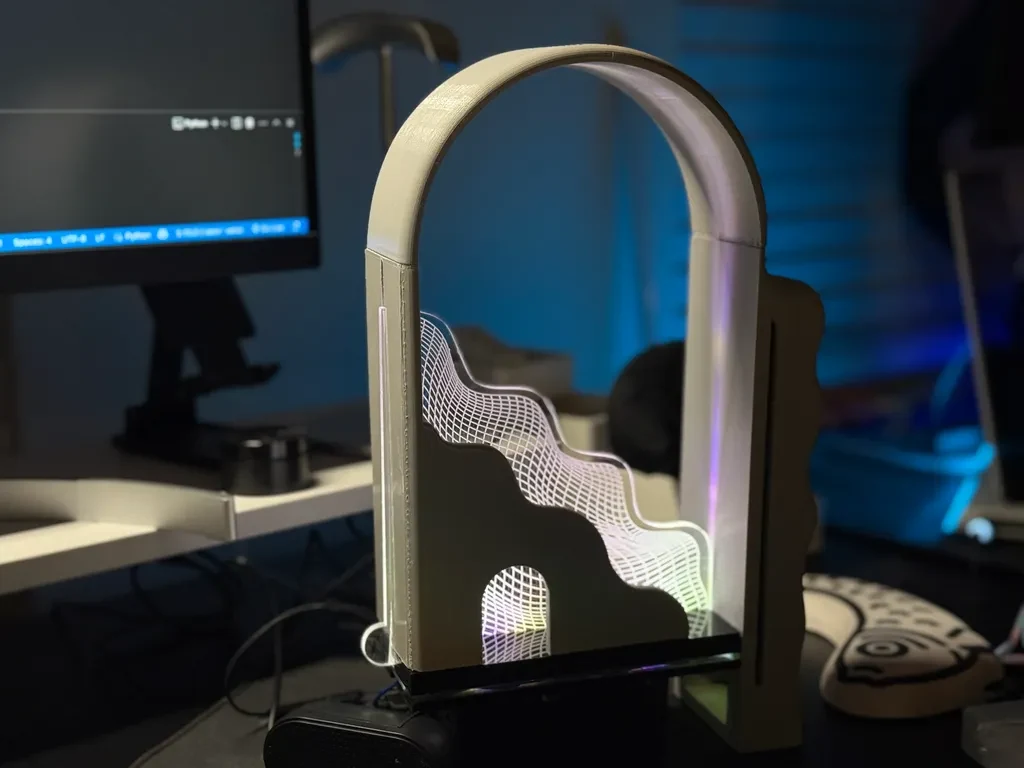
The physical prototype in use, recorded during the project.
Open recording ↗02 / Three design decisions
I treated personalization as a set of interaction choices: how Mornova speaks, what context it uses, and how someone can respond without reaching for a screen.
A helpful message can still feel wrong in the wrong voice. Calm, Direct, Playful, and Friendly personalities let people choose the tone of their morning companion.
Weather and calendar information give the assistant a reason to adapt. Wake-time settings, routine controls, and snooze keep the experience open to the person’s own judgment.
A recommendation should support the routine.
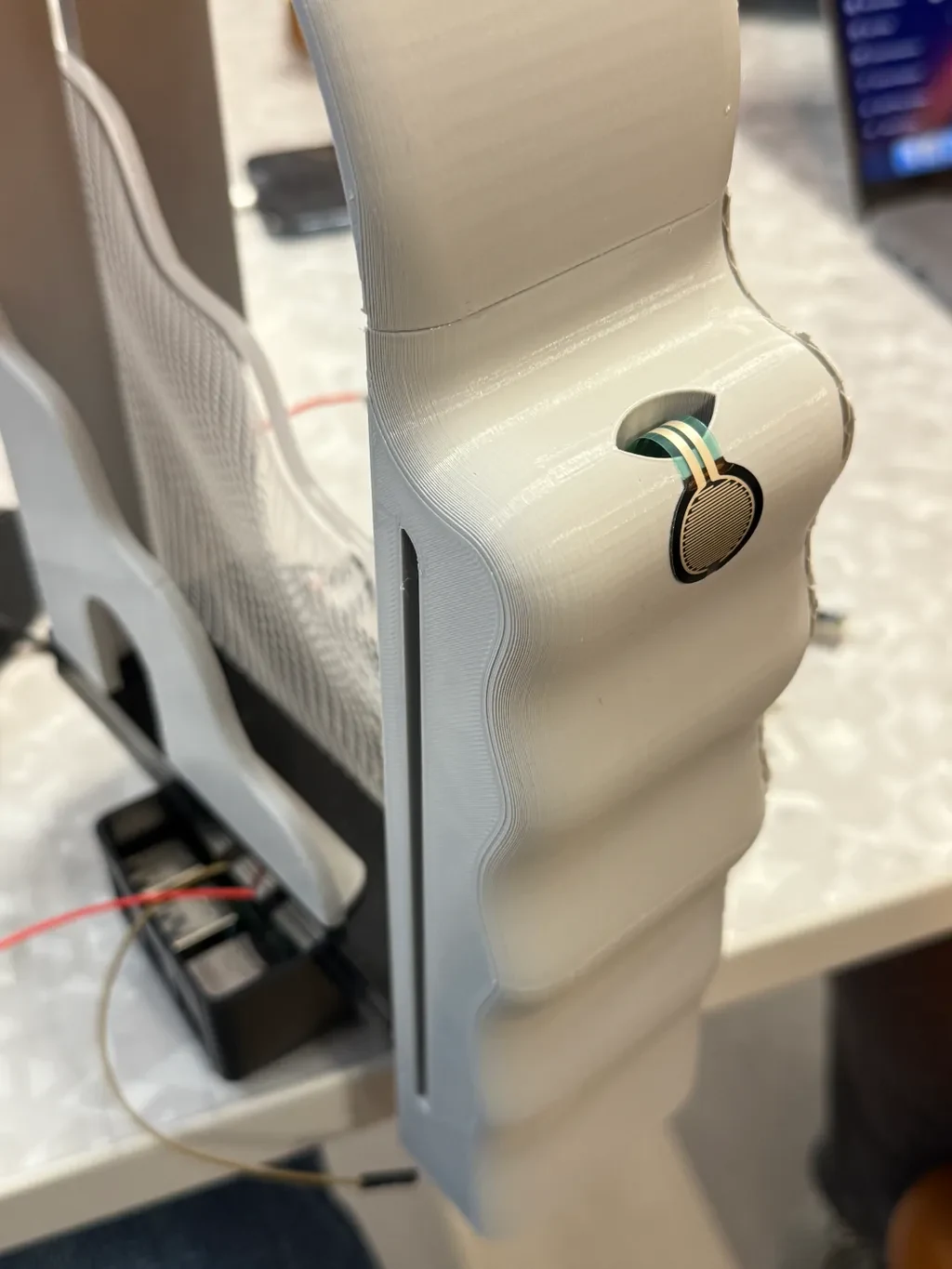
Light carries part of the experience into the room. A pressure sensor provides a direct snooze gesture: press and hold for five seconds, without navigating the dashboard.
03 / Making the physical product
The lamp combines a printed core, a layered acrylic stand, and an engraved acrylic light sheet. Building it exposed a problem that the CAD model alone had not resolved: how to print, assemble, and route the electronics cleanly.

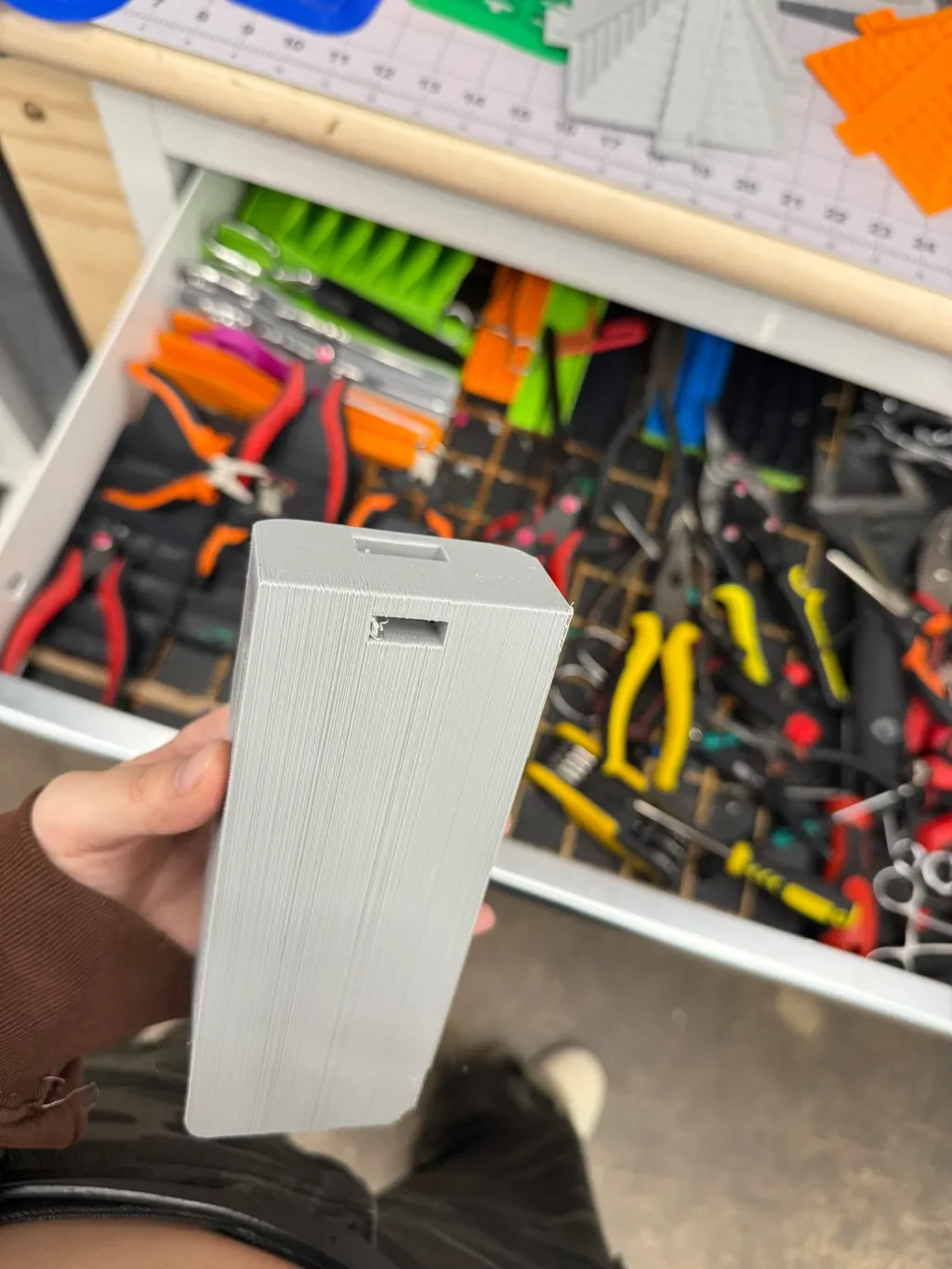
Vertical hollows and overhangs needed dense internal supports. Removing them was slow and left some areas rough or fragile. The structure also needed more deliberate space for wiring.

Tapered, leaf-shaped hollows could bridge during printing without supports. I refined wire channels and alignment with the acrylic parts, making assembly cleaner and carrying the organic motif through the object.
The shape became more coherent when I designed around how it would actually be made.
04 / Connecting the system
I connected the dashboard, AI service, and lamp in a working end-to-end prototype. The physical build used live calendar and weather context; the browser preview below presents the interaction design separately.
Wake time & preferences
Calendar & weather
Context handling
AI conversation
Light & sound
Pressure-sensor snooze
Structure and routing for the electronics.
A swappable light sheet and layered stand.
Warm-white LEDs, audio, and a pressure sensor.
Try the interaction design
Choose a personality, set a routine, and explore the wake-up flow in the browser prototype.
This preview uses scripted conversation and a live forecast for Durham, NC. Calendar entry and routine controls are interface demonstrations; they do not schedule an alarm or control the physical lamp.
Open the full-screen previewYour morning, your Mornova.
Interactive web prototype05 / Outcome & reflection
The physical lamp, AI conversation, and live calendar and weather connections worked together. I tested the system myself and with friends.
Testing so far has been informal. The next step is a structured study of how people understand and use Mornova in their everyday routines.
The interaction cannot be designed only on a screen. Sensor placement, the feel of a gesture, and the way light moves through the material all shape the experience. Iterating on the object made those decisions tangible.
A structured study of setup, morning use, and snooze: can someone understand the recommendation, adjust it confidently, and use the lamp without assistance? Repeated use would help distinguish a pleasing first impression from a useful routine.